
NASA SPACE APPS STEM ALPHECCA
The NASA International Space Apps Challenge (Space Apps) is an international hackathon for coders, scientists, designers, storytellers, makers, builders, technologists, and others in cities around the world, where teams engage the National Aeronautics and Space Administration’s (NASA’s) free and open data to address real-world problems on Earth and in space.
Since its inception in 2012, NASA’s International Space Apps Challenge has engaged 180,000+ registrants from 150+ countries/territories in using NASA’s open data to build innovative solutions to challenges we face on Earth and in space.
To learn more about the history of Space Apps and its impact over time, visit our history page
THE MOST STRIKING PROJECT OF NASA THE APOLLO PROJECT
Kurslarımız hakkında daha fazla bilgi edinmek için iletişime geçmekten çekinmeyin.

THE APOLLO PROJECT IS A MOON VOYAGE PLAN THAT WAS ORGANIZED BY NASA. ALTHOUGH IT IS THE NEXT PROJECT AFTER THE GEMINI PROJECT, SPACE RACE AND COLD WAR HAVE BEEN INFLUENTIAL IN REACHING THE APOLLO PROJECT STAGE. THE PROJECT WAS IMPLEMENTED BETWEEN 1961 AND 1975 WITH APOLLO SPACECRAFT AND SATURN V. THE APOLLO PROJECT WAS NAMED AFTER THE GREEK GOD APOLLON.
This is your Service Description. Use this space to explain this service in more detail.

APOLLO PROJECT MODELLING

APOLLO PROJECT MODELLING

JUPITER
NASA SPACE APPS STEM
Jupiter is the second largest object in the solar system after the sun. Therefore, it is our largest giant planet. Astronomers have known about these gigantic dimensions of Jupiter for centuries. In the sources that have survived from ancient times, Jupiter is shown as one of the 7 celestial bodies known for the difference in their apparent movements from other stars, along with the Moon, Sun, Mercury, Venus, Mars and Saturn . With this aspect, the planet, which is important for ancient astronomy as well as for astrology, has preserved its place in human culture from prehistory to the present day as one of the beings that gave its name to the seven days of the week. Its diameter is 11 times the diameter of the earth. Jupiter is so big that 1320 Earths could fit inside it.
Galileo Galilei was the first to notice that Jupiter is a circular object on which bands of varying darkness can be distinguished. Galileo was the first scientist to use the telescope for astronomical purposes. Galilei also discovered the 4 largest moons of Jupiter. He used this first evidence that a planet other than Earth could have orbiting moons to support Copernicus' heliocentric Theory, which was hitherto not widely accepted. More than 90% of the total mass of the solar system is concentrated in the Sun. Therefore, the center of mass of the system remained inside the sun. Other members of the system revolve around this center of mass in certain orbits in accordance with Kepler's laws. Most of the orbits are close to the circle in shape (ellipse with a very small eccentricity) and lie roughly in the same plane. The plane formed by the Earth's orbit around the sun is called the "ecliptic". The orbits of other planets make very small angles with this plane. Only the dwarf planet Pluto differed from other planets with its 17o angle with the ecliptic plane of its orbit.

SPACE APPS NASA STEM
Project Apollo is one of the important points in humanity's space adventure. It's the first time a manned mission has been made outside of Low Earth orbit, and the first time a human has been sent to another celestial body. For the first time, a manned spacecraft orbited a celestial body with Apollo 8. Apollo 17, on the other hand, is important in that it is the last Moonwalk and the last manned mission to be conducted outside of Low Earth orbit. During the project, important developments took place in aviation, communication and computer technologies as well as rocket and manned spacecraft technologies. The project sparked interest in many areas of engineering. The items and artifacts belonging to the project are exhibited in various places around the world, especially the Smithsonian National Aviation and Space Museum.
SPACE APPS NASA ART SUNSPOTS

Sunspots form in the outermost layer of the Sun, called the light sphere. It appears as dark spots because its temperature is lower compared to its surroundings. Concentration of the magnetic field in certain areas prevents the even distribution of heat. As a result, regions that we call Sunspots, which have a lower surface temperature than the surrounding light sphere, are formed. These often appear in pairs. Both are opposite magnetic poles of each other.[2] Sunspots are clearly visible as black spots even if they have a temperature of approximately 3,000-4,500 K (2,700-4,200 °C). Because the surrounding regions have a temperature of approximately 5,780 K (5,500 °C). As with blackbody radiation, the luminous intensity of spots is directly proportional to the fourth power of its temperature. If we could separate the sunspots from the sphere of light forming its surroundings, it would appear much brighter than the Moon.[3] These spots both contract and expand as they travel across the Sun's surface. If we think of spots as circles, they can be small, 16 kilometers[4] in diameter, or large, 160,000 kilometers[5] in diameter. The larger ones can be seen from Earth even without a telescope.[6] They can also have relative velocities of several hundred meters per second when they first appear in the light sphere. Sunspots indicate intense magnetic activity, as do coronal loops and magnetic coupling events. Most solar flares and coronal mass ejections occur in active magnetic fields around regions where sunspots are grouped. Similar phenomena have been observed indirectly in stars other than the Sun, by measuring the light and dark regions. These are called star spots.
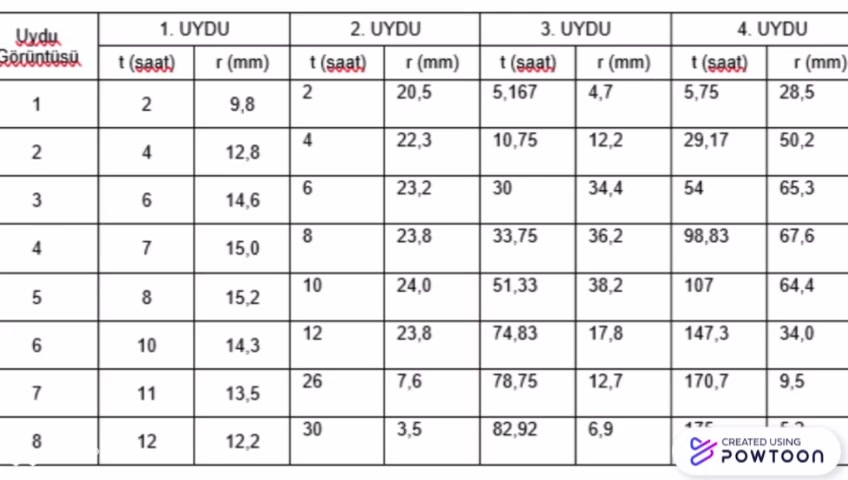
THE SHAPE OF THE BUTTERFLY ARISING FROM THE GRAPH OF SUNSPOTS
The inclination of the sun's calculation graph gives the period of the earth's rotation


SUNSPOT
COMBINING SUNSPOTS WITH MARBLING ART
Creating marbling art from the butterfly pattern emerging from the sunspot graphic
.jpeg)
COMBAINING SUNSPOTS WITH MARBLING ART

COMBAINING SUNSPOTS WITH MARBLING ART

SPACE APP NASA STEM
JAMES WEBB SPACE TELESCOPE
This stunning image includes spiral galaxy IC 5332, shown here in unprecedented detail, thanks to observations by the Mid-Infrared Instrument (MIRI) mounted on the NASA/ESA/CSA James Webb Space Telescope. IC 5332 lies 29 million light-years from Earth and is roughly 66,000 light-years in diameter, making it slightly larger than the Milky Way. It is notable that he is almost perfectly face-to-face with the Earth, allowing us to admire the symmetrical sweep of his spiral arms. Credits: ESA/Webb, NASA & CSA, J. Lee and the PHANGS-JWST and PHANGS-HST Teams

Tüm Videolar
BIZE ULAŞIN

